When shopping online on e-commerce platforms or third-party marketplaces, consumers frequently encounter two terms that are easy to confuse: Marketplace Buyer Protection and a Seller’s Independent Warranty. Although both aim to minimize risk for buyers, they operate on vastly different legal mechanisms, coverage scopes, and claim timeframes.
Understanding the boundaries between these two protective mechanisms helps you avoid unnecessary financial loss, proactively address product issues, and ensure you do not miss critical claim deadlines.
Overview of the Two Online Buyer Protection Mechanisms
When an order issue occurs, the party responsible for handling it and the source of compensation depend on which mechanism you apply:
Marketplace Buyer Protection: A policy provided directly by the shopping platform (such as eBay, Amazon, Shopee, Lazada, or Facebook Marketplace). The marketplace acts as a neutral escrow intermediary holding the funds and resolving disputes related to transaction fulfillment, shipping, or item condition immediately upon delivery.
Seller’s Independent Warranty: A separate quality guarantee offered directly by the store merchant or manufacturer. This commitment operates independently of platform rules, focusing on long-term durability, functional performance, and the repair or replacement of parts within a specified timeframe post-purchase.
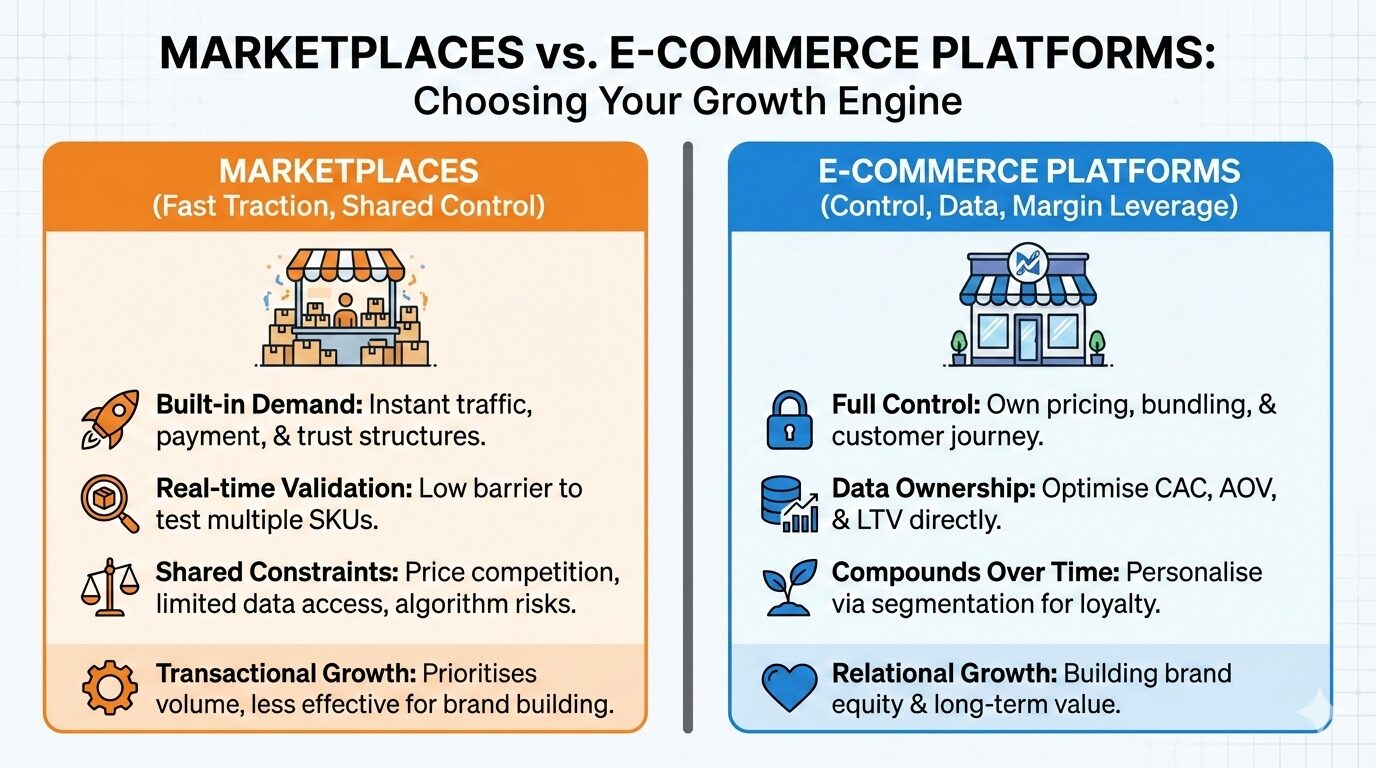
Side-by-Side Comparison: Marketplace Protection vs. Seller's Independent Warranty
Comparison Criteria
Marketplace Buyer Protection
Seller's Independent Warranty
Responsible Party
Platform / E-Commerce Marketplace
Store Merchant / Seller / Manufacturer
Core Purpose
Transaction & Shipping Safety
Product Durability & Long-Term Operational Quality
Coverage Scope
Non-delivery, transit damage, wrong item, significantly not as described
Technical defects, hardware failures, manufacturing material flaws
Claim Window
Short (Typically 3 to 30 days post-delivery)
Long (Typically 3 months, 1 year, to multiple years)
Compensation Method
Full refund, free return/exchange via platform
Free repairs, component replacement, equivalent item replacement
Mandatory Requirement
Payment processed strictly through platform payment gateway
Valid proof of purchase, receipt, or warranty card
Detailed Analysis of Coverage Scopes and Core Differences
1. Marketplace Buyer Protection
Platform protection policies are specifically built to resolve issues arising during the order fulfillment stage. The platform intervenes when:
The order is not delivered or gets lost during transit.
The package arrives broken, crushed, or missing items upon unboxing.
The received item is completely different from the listing image or technical specifications.
The single most important aspect of this mechanism is the escrow payment system. When you place an order, your payment is not immediately released to the seller; instead, it is temporarily held by the platform. If you file a valid claim within the designated window, the platform freezes the funds and refunds you directly without requiring the seller's prior consent.
2. Seller’s Independent Warranty
In contrast to platform protection, a seller’s warranty becomes effective primarily after the initial delivery phase is successfully completed. This represents a commercial commitment regarding the product's operational performance.
A seller's warranty scope typically includes:
Resolving latent defects—technical failures that only manifest after extended real-world use.
Supplying official replacement parts or routine maintenance services.
Replacing the unit entirely if a severe manufacturer flaw cannot be repaired.
However, all intake procedures, return shipping costs, and technical evaluation standards are governed by the seller's own warranty terms and conditions.
Processing Workflows and Claim Windows
Timing is the single most critical factor in determining whether a claim succeeds:
For Marketplace Policies: Claim windows are strictly enforced. Most platforms require buyers to confirm receipt or file a claim within 3 to 7 days (extending up to 15–30 days for official brand stores). Once this window closes, the platform automatically releases payment to the seller and closes the dispute portal on the application.
For Seller Warranties: Timeframes are far more flexible, spanning months or years. Activating a warranty typically requires registering a digital tag, retaining the original store receipt, or providing the order ID. Resolution times vary from a few days to several weeks depending on the seller's technical capacity and service center location.
Common Pitfalls That Lead to Rejected Claims
Online shoppers frequently lose money by failing to navigate these contractual boundaries:
Off-Platform Transactions: This is the most damaging mistake. If a seller convinces you to transfer funds directly via wire transfer, personal peer-to-peer payment apps, or external links to "receive a discount," you instantly lose all Marketplace Buyer Protection.
Confusing Platform Windows with Warranty Periods: When an item fails after 2 months of use, buyers often open a platform dispute. This will be rejected due to an expired claim window. At this stage, you must work directly with the seller through their independent warranty channels.
Failing to Record Unboxing Evidence: Lacking video evidence of the unboxing process is a primary reason platforms reject refund requests for broken or missing items.
4-Step Decision Framework to Prioritize the Right Protection
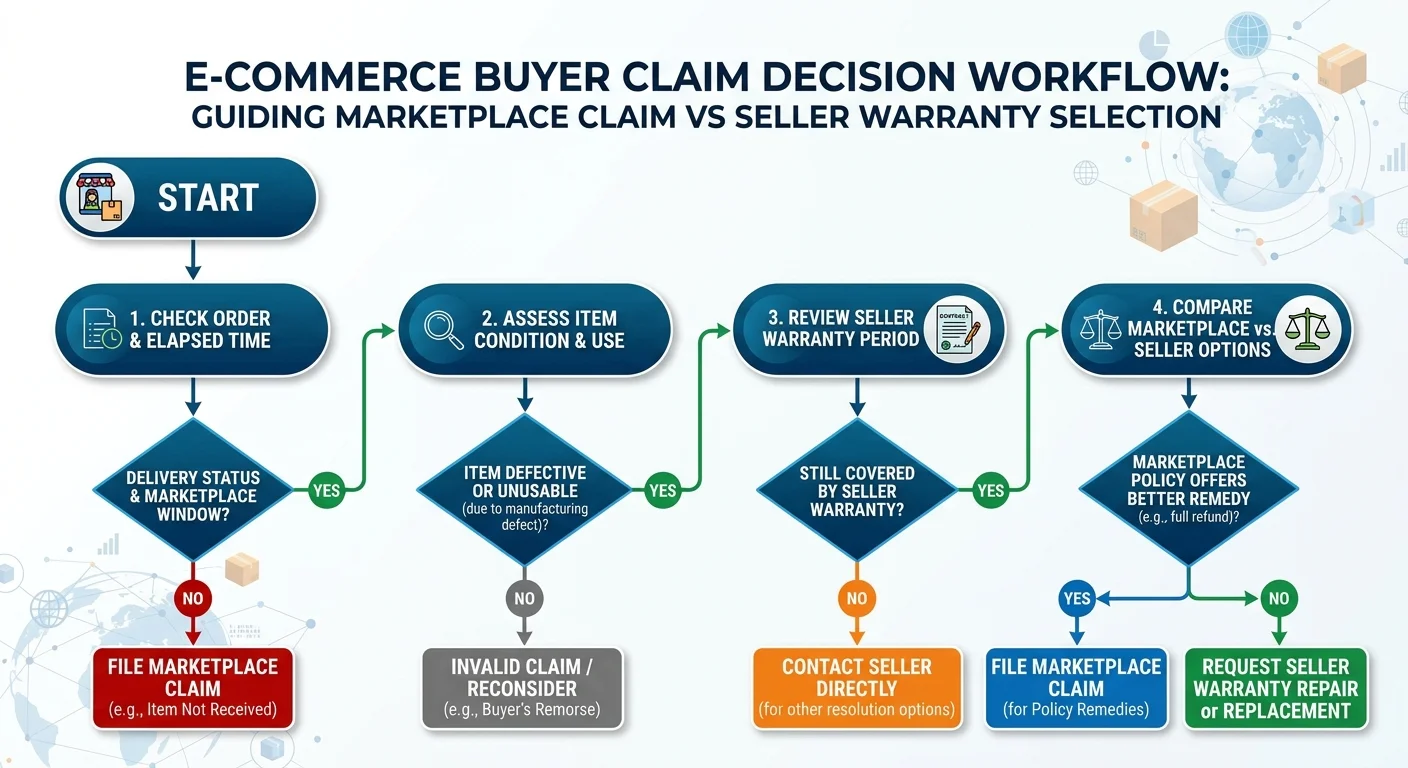
To maximize your protection when an issue occurs, follow this precise 4-step framework:
Inspect the item immediately upon delivery: Record a detailed video while opening the package. Inspect physical appearance, contents, and basic operating functions.
Evaluate the issue's timing and nature:
If damaged, incomplete, wrong item, or defective out-of-the-box: Prioritize Marketplace Buyer Protection.
If the item works initially but develops a technical defect after weeks of use: Switch to the Seller's Independent Warranty.
File through official channels:
For Marketplace Protection: Click the "Return/Refund Request" button directly within the app before the auto-confirmation deadline expires.
For Seller Warranty: Contact the merchant via their official customer service hotline, store chat, or submit the item to an authorized warranty center with proof of purchase.
Track progress and maintain documentation: Save all messaging logs, delivery receipts, and repair tickets until the issue is fully resolved.
Can I apply both Marketplace Protection and a Seller Warranty to the same issue?
No. You must select the mechanism corresponding to when and how the issue occurred. If an item arrives broken or defective upon delivery, file a Marketplace Protection claim immediately for a direct refund. Never agree to send an item back to the seller for repairs when it arrives defective, as doing so causes your platform claim window to expire.
Are transactions paid outside the e-commerce platform protected?
Not at all. Marketplace Buyer Protection applies exclusively to transactions completed 100% through the platform's integrated payment gateway. Transferring funds off-platform forfeits all platform dispute rights in the event of fraud or misrepresentation.
Will the platform refund an item that fails after 2-3 months of use?
E-commerce platforms do not issue refunds for items developing defects months after delivery, unless you purchased a separate extended protection plan during checkout. For post-delivery operational defects, you must contact the seller or manufacturer directly under warranty terms.
What should I do if a seller refuses to honor their warranty commitments?
If a seller refuses warranty service during an active warranty period, report their behavior to the platform's Customer Support team so they can apply merchant penalties (such as account demerit points or listing suspensions). Additionally, you can file a complaint with consumer protection agencies using your invoice and written warranty terms as evidence.